IoT in Education: The Role of Connected Technologies in Modern Learning
)
The traditional classroom is hitting a wall. Between rising operational costs, administrative burnout, and the challenge of keeping students engaged in a digital-first world, the old "one-size-fits-all" model is lagging.
IoT in education is becoming a full-scale upgrade to the operating system of modern learning. Institutions are gradually turning static buildings into living ecosystems of data, automation, and real-time communication. Within the IoT in the education sector, classrooms are no longer isolated spaces but part of a connected digital infrastructure that supports teaching, learning, and administration.
The Core Problem Remains the Siloed Campus
The Internet of Things in education refers to a system of interconnected devices, sensors, and software platforms that communicate with each other to collect, share, and analyze data in real time. IoT devices in education commonly include:
environmental and occupancy sensors
interactive whiteboards and smart displays
tablets, laptops, and 1:1 learning devices
cameras, access control systems, and attendance tools
connected lab equipment, robotics kits, and smart learning tools
Even with the growing popularity of smart devices, many institutions today suffer from "data silos." The HVAC doesn't know a wing is empty, teachers don't know a student is disengaged until the mid-term, and expensive equipment vanishes because there is no way to track it. This lack of visibility leads to wasted budgets and missed educational opportunities.
The solution lies in the invisible layer: connectivity and software platforms. Without a robust network, a "smart" device is just an expensive offline tool.
Software is the brain: Modern IoT solutions for education use software to analyse real-time data, alerting educators to engagement gaps before they become failing grades.
Connectivity without the headache: Schools need to keep thousands of edge devices online without a technical meltdown.
Benefits of IoT in Education
The benefits of IoT in education move the needle where it matters most:
Personalized learning experiences
IoT can help tailor learning to each student. By understanding how students interact with digital content, connected systems can support lessons that move at a pace that feels right for each learner.Real-time insights and attendance tracking
Connected devices make it easier to track attendance, device usage, and classroom activity in real time. This gives schools and universities clearer insights to support better, data-informed decisions.Simpler access to learning resources
From digital materials to labs and shared equipment, IoT makes accessing resources easier. Automated permissions and inventory systems reduce paperwork and save time for both students and staff.Lower costs through smarter energy use
IoT sensors can automatically adjust lighting, heating, and cooling based on how spaces are used. This helps reduce energy waste while keeping classrooms comfortable.Remote monitoring and hands-on learning
With connected cameras and sensors, experiments and facilities can be monitored remotely. This supports collaboration, improves safety, and makes it easier to run practical, hands-on learning activities.
Most Popular IoT Education Use Cases
Practical IoT in education examples
Some of the most common ways IoT shows up in education today include:
Automated attendance tracking, where connected devices help reduce manual check-ins
Smart classrooms with interactive boards that support live collaboration and group activities
Energy-efficient campuses, using occupancy-based HVAC systems to avoid wasting power
Connected laboratories, allowing experiments to be monitored remotely and more safely
Digital asset management, making it easier to keep track of laptops, tablets, and other learning devices
Together, these examples show how IoT in the education sector creates real, everyday value when devices, software, and connectivity work seamlessly behind the scenes.
The Role of IoT Software and Connectivity in Education
While devices are the most visible part of IoT, the real value of IoT for education comes from the combination of IoT software platforms and reliable connectivity.
IoT software enables schools and universities to:
manage and monitor thousands of connected devices from a single interface
collect and analyze real-time data from classrooms and campuses
automate workflows such as attendance tracking and energy management
apply security management policies and access controls consistently
At the same time, connectivity is the foundation that allows IoT systems to function. Educational environments often rely on:
cellular and low-power wide-area connectivity for distributed devices
Wi-Fi and wired networks for high-bandwidth classroom tools
Without stable, scalable software and connectivity, even the most advanced IoT devices in education cannot deliver consistent results. As IoT adoption grows, connectivity becomes just as critical as the devices themselves.
1NCE supports IoT in education by providing global IoT connectivity and software services that help educational institutions and solution providers connect, manage, and scale IoT deployments more efficiently. With long-term connectivity, predictable costs, and centralized device management, 1NCE enables IoT solutions for education to operate reliably across classrooms, campuses, and regions.
By reducing the complexity of connectivity and IoT lifecycle management, 1NCE helps organizations focus on what matters most: delivering secure, accessible, and engaging learning experiences powered by connected technologies.
Pocketalk and 1NCE: Supporting Inclusive Learning
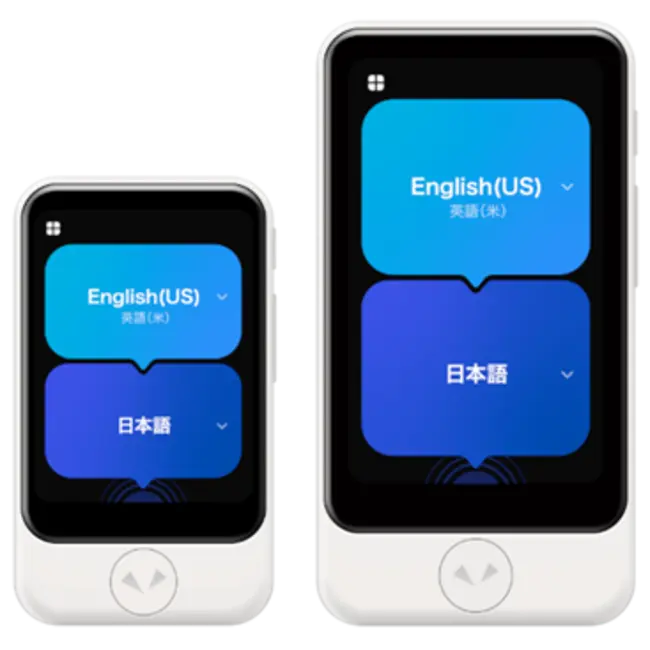 In increasingly diverse classrooms, language differences can make learning and participation more challenging for students, parents, and educators. Connected translation tools offer a practical way to support inclusion in everyday educational settings.
Devices like Pocketalk, powered with 1NCE, enable real-time translation during lessons, group work, and school interactions, helping non-native speakers better follow discussions and participate with confidence. This can be especially valuable in international schools, exchange programs, and multicultural classrooms.
FAQ
What is IoT in education?

What is IoT in education?
IoT in education refers to the use of connected devices, sensors, and software platforms to collect and share data in real time, improving learning experiences and institutional operations.
What are the benefits of IoT in education?
What are the benefits of IoT in education?
The main benefits include interactive learning, improved collaboration, personalized education, energy efficiency, enhanced security, and streamlined administration.
How is IoT used in higher education?
How is IoT used in higher education?
IoT in higher education is used for smart campuses, attendance tracking, asset management, energy optimization, research labs, and hybrid learning environments.
What are common IoT devices in education?
What are common IoT devices in education?
Common IoT devices in education include smart boards, tablets, laptops, sensors, cameras, access control systems, and connected lab equipment.
Is IoT in education secure?
Is IoT in education secure?
Yes, when implemented correctly. Secure connectivity, encryption, access controls, and proper device management are essential for protecting student and staff data.
What are real-world IoT in education examples?
What are real-world IoT in education examples?
Examples include smart classrooms, automated attendance systems, energy-efficient campuses, connected laboratories, and digital asset tracking.
Why does IoT matter in the education industry?
Why does IoT matter in the education industry?
The growing importance of IoT in the education industry lies in its ability to support modern learning models while addressing operational and infrastructure challenges.
Accessibility: IoT enables hybrid and remote learning by connecting students and teachers beyond physical classrooms. Learning materials, lessons, and resources become accessible anytime and anywhere, supporting inclusive education and reducing geographic barriers.
Interactivity: Smart classrooms powered by IoT allow students to engage directly with content. Interactive screens, simulations, and real-time experiments transform passive instruction into hands-on learning.
Collaboration: IoT supports collaboration through connected platforms and devices that enable real-time teamwork, whether students are in the same classroom or participating remotely.
At the same time, IoT prepares students for a connected world by building familiarity with technologies that are increasingly common in everyday life and future workplaces.
More for European IoT Builders
Catch the latest news for the EU market, then go deeper with the technical guides covering CE, RED, and GDPR-ready connectivity.
Newsletter