Connected Health: Bringing Healthcare Closer, Smarter, and More Human
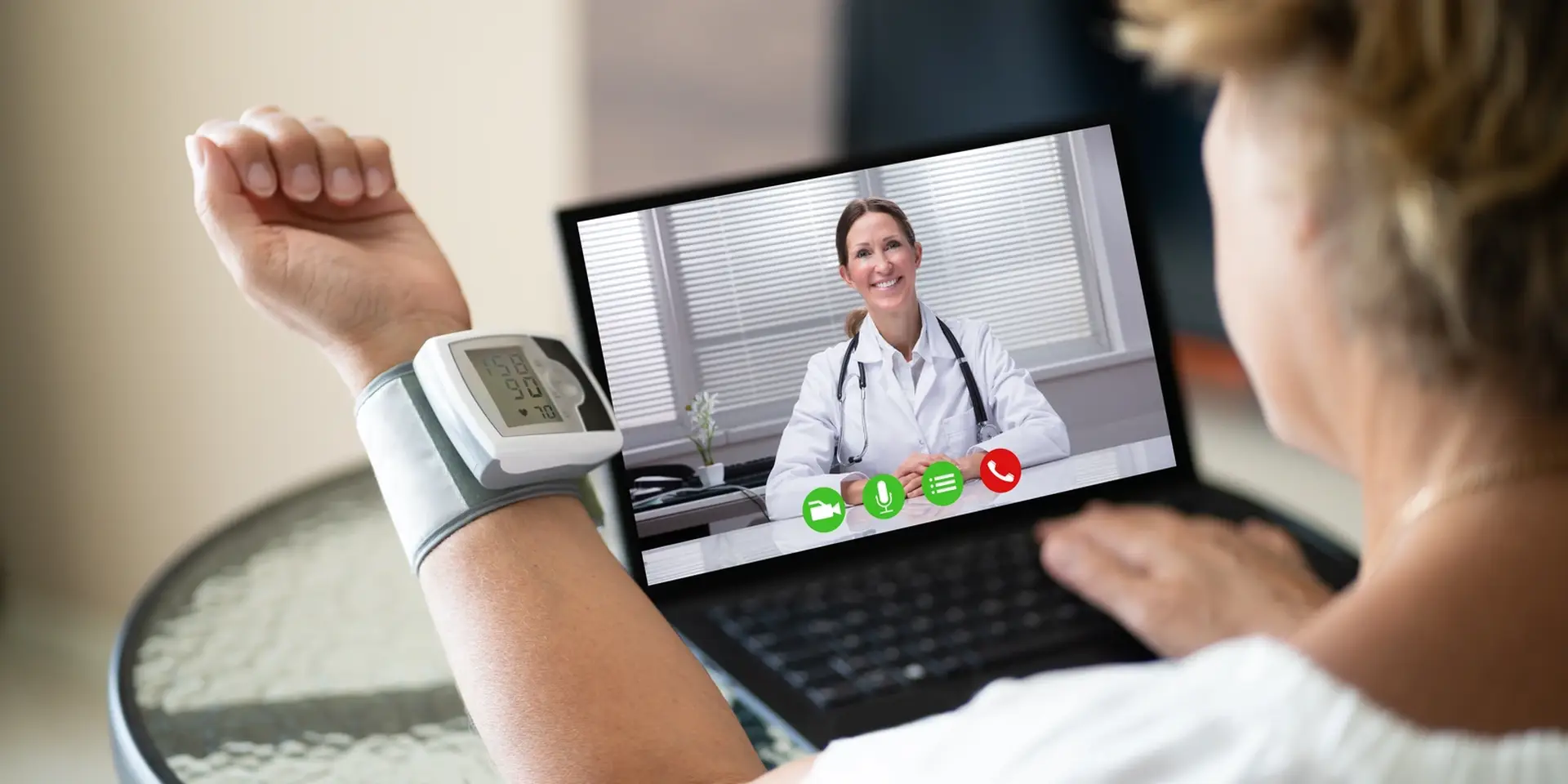
With populations aging, chronic conditions becoming more common, and healthcare professionals under growing pressure, the traditional model of occasional hospital visits is no longer enough. Patients today expect care that fits into their lives - accessible, reliable, and tailored to their needs.
IoT telemedicine makes this possible. By connecting medical devices, patients, and care teams, it brings healthcare beyond hospital walls and into everyday life. Remote monitoring is already becoming the norm: according to Berg Insight, the number of remotely monitored patients is expected to reach 140.1 million by 2028. Behind the scenes, IoT helps keep these healthcare devices securely connected worldwide - so care can happen anytime, anywhere.
IoT-connected Health, in Simple Terms
IoT telemedicine or connected health uses connected medical devices and sensors to collect health data and send it securely to doctors and care providers. This can happen at home, in a care facility, or on the move - without the patient needing to be in a hospital.
Instead of seeing a patient only a few times a year, healthcare professionals can follow their health continuously and step in early when something changes.
Why IoT Telemedicine Is Growing So Fast
Several trends are driving the rapid adoption of IoT telemedicine:
More people living with chronic conditions that need ongoing monitoring
Growing demand for home care and remote treatment
Shortages of healthcare professionals
Pressure to reduce costs without lowering quality of care
Better, smaller, and more energy-efficient connected medical devices
Together, these factors are making connected care a core part of modern healthcare systems.
IoT: The Silent Enabler of Connected Health
Behind every connected health solution is software and connectivity that simply have to work. Medical devices must send data reliably, securely, and often for many years - with minimal maintenance. Batteries need to last. Connections need to stay stable. Data must be protected and compliant with healthcare regulations.
When connectivity is reliable and invisible, patients and healthcare professionals don’t have to think about it. They can focus on care.
Common Connected Health Use Cases
IoT enablement within telemedicine and eHealth ecosystems supports a wide range of medical and care-related applications:
Application | Description |
Remote Patient Monitoring (RPM) | Continuous monitoring of vital signs such as heart rate, blood pressure, glucose levels, oxygen saturation, and temperature, transmitted securely to healthcare providers. |
Chronic Disease Management | Long-term monitoring and data collection for patients with diabetes, cardiovascular disease, respiratory conditions, and other chronic illnesses. |
Telecare & Elderly Care | Connected devices and emergency alert systems enabling independent living while ensuring rapid response in case of incidents or health deterioration. |
Wearable Health Devices | Smart wearables collecting biometric data for preventive care, early diagnosis, and post-treatment monitoring. |
Medication Adherence Monitoring | Connected pill dispensers and reminders to improve adherence and reduce treatment errors. |
Post-Acute & Home Care | Monitoring patients after surgery or hospital discharge to reduce readmissions and ensure recovery progress. |
Emergency Alerts & Fall Detection | IoT-enabled sensors and wearables that detect falls or abnormal patterns and trigger immediate alerts to caregivers or emergency services. |
Secure Medical Data Transmission | Encrypted, compliant data transfer from devices to healthcare platforms and electronic health record (EHR) systems. |
The IoT Market of Connected Health
The global connected health market is experiencing rapid growth as healthcare systems shift toward remote-first and hybrid care models.
North America and Europe currently lead connected health adoption, while Asia-Pacific is showing the fastest growth due to expanding healthcare infrastructure and mobile-first healthcare models.
Learn more about connected health and eHealth vendors:
Vendor | Region | Product Offered | Website |
Philips Healthcare | Global | Remote patient monitoring, connected medical devices | |
A&D Medical | Global | Connected blood measure monitoring | |
Medtronic | Global | Connected medical devices, remote diagnostics | |
ResMed | Global | Connected respiratory care and sleep monitoring | |
Teladoc Health | United States | Virtual care and telehealth platforms | |
Abbott | Global | Continuous glucose monitoring (CGM) systems | |
Omron Healthcare | Global | Connected blood pressure and health monitoring devices | |
Withings | Europe | Consumer health wearables and medical devices | |
BioTelemetry | United States | Remote cardiac monitoring solutions | |
iRhythm Technologies | United States | Wearable cardiac monitoring | |
Care Innovations | United States | Remote care and aging-in-place solutions |
Where 1NCE Fits In
From remote patient monitoring to elderly care and connected diagnostics, 1NCE helps ensure that medical devices stay connected securely and reliably throughout their entire lifecycle.
In IoT-connected Health, data needs to flow securely and reliably - often from devices that operate for years on a single battery and in hard-to-reach locations. 1NCE supports connected healthcare solutions with software tools designed to simplify device management, reduce complexity, and keep medical data moving smoothly at scale.
Device Authenticator
The Device Authenticator uses the SIM-as-an-Identity principle, leveraging the unique and secure identity of the 1NCE SIM card to authenticate the device. This eliminates the need for complex and potentially insecure credential provisioning processes, which is critical for handling sensitive patient data in compliance with healthcare regulations like HIPAA.
IoT Integrator
The IoT Integrator is composed of two key parts:
Device Integrator: This service allows devices to connect to the 1NCE OS using standard protocols like UDP, CoAP, and LwM2M. This is crucial for the diverse ecosystem of medical devices, which may use different communication protocols.
Cloud Integrator: This service forwards the data from the devices to the customer's cloud platform (e.g., AWS, Azure) or a custom webhook. This seamless integration is vital for making the collected health data available to healthcare professionals through Electronic Health Record (EHR) systems and other medical applications.
Device Inspector
The Device Inspector provides a centralized dashboard to monitor the status, connectivity, and data usage of all deployed SIM devices. This is essential for managing large fleets of medical devices, ensuring they are functioning correctly, and troubleshooting any issues remotely, which reduces the need for costly on-site maintenance.
Whereabouts
Provides location insights without GPS - useful for tracking deployed medical devices while keeping power consumption low.
Energy Saver
Optimizes power usage for battery-powered medical devices, helping them operate reliably for years with minimal maintenance.
Explore more about real world case studies in Healthcare:
Is Telemedicine about Replacing Hospitals?
Connected health is not about replacing doctors or hospitals. It’s other way around. It supports them - with better data, earlier insights, and care that fits into people’s lives.
As healthcare continues to move beyond traditional clinical settings, connected medical devices and reliable IoT software and connectivity will become even more important. With the right foundation in place, telemedicine can deliver safer care, better outcomes, and a more human healthcare experience.
More for European IoT Builders
Catch the latest news for the EU market, then go deeper with the technical guides covering CE, RED, and GDPR-ready connectivity.
Newsletter