SGP.32 for IoT Connectivity
Preparing for the Next Step in eSIM Management
)
Preparing for the Next Step in eSIM Management
SGP.32 isn't the right answer for every project. Here's how to tell if it's the right answer for yours.
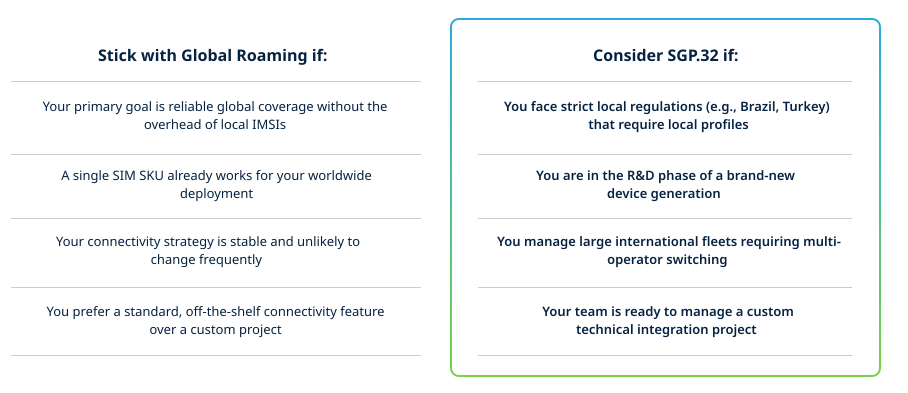
The specification is defined, but the supply chain is still catching up. Most implementations today are handled as structured projects because they depend on four critical elements:

Requires the latest generation of eUICC SIMs; older hardware won't work.

Your device must support specific software components (IPA) to manage the profiles.

You need a system to orchestrate switches across your fleet (eIM).

You must define exactly when and why a profile switch should trigger.
Talk to our solution architects and check what SGP.32 means for your setup.
SGP.32 only works when the hardware, software, and network are in perfect sync. To move toward a software-defined SIM, your architecture needs these three pillars:
IoT Profile Assistant (IPA)
Software running on the device or SIM that manages profile operations.
eSIM IoT Remote Manager (eIM)
A platform that orchestrates connectivity profiles across devices.
Secure Profile Delivery
Infrastructure that distributes encrypted operator profiles to devices.
The SGP.32 ecosystem is still maturing as manufacturers and operators build out support. We monitor these shifts closely so you don't have to. Here is how you can stay ahead:
Follow the updates: Subscribe to our newsletter and get notified as the standard reaches mass-market readiness.
Talk to our solution architects: Meet our experts and check what SGP.32 means for your setup.
Newsletter
What is the SGP.32 standard for IoT?

SGP.32 is a GSMA specification designed for remote SIM provisioning in IoT devices. It enables connectivity profiles to be downloaded, activated, and managed remotely across device fleets without replacing physical SIM cards.
How is SGP.32 different from earlier eSIM standards?
Earlier standards such as SGP.02 were designed for machine-to-machine deployments managed primarily by network operators. SGP.32 introduces a new architecture that allows IoT devices and platforms to participate more actively in profile management through components such as the IoT Profile Assistant (IPA) and the eSIM IoT Remote Manager (eIM).
How does SGP.32 work?
SGP.32 introduces a more flexible architecture for managing IoT eSIM profiles. Unlike previous standards, it allows IoT platforms and manufacturers to lead connectivity management rather than relying solely on operator infrastructure. Key components include:
IoT Profile Assistant (IPA): Software on the device or SIM that handles profile downloads.
eSIM IoT Remote Manager (eIM): A central tool to trigger and manage profile changes across entire fleets. Together, these enable seamless, over-the-air profile switching.
What problem does it solve?
SGP.32 is built for the complexities of global IoT, specifically addressing:
Global Deployment: Managing devices across different international operators.
Local Regulations: Meeting requirements for local connectivity in restricted regions.
Future-Proofing: Updating connectivity strategies over long device lifecycles without replacing physical SIM cards.
Does it replace roaming?
No. Roaming remains a primary connectivity tool. SGP.32 acts as a complementary layer, allowing a device to switch its home profile when long-term local connectivity is more efficient or required by law.
Is SGP.32 widely deployed today?
The ecosystem is currently in the early adopter phase. While the standard is finalized, hardware vendors and operators are still rolling out full support. Most current projects are pilots or specialized early deployments.
Are specific SIM cards required?
Yes. SGP.32 requires the latest generation of eUICC hardware designed to support its specific command sets. Older eSIMs generally cannot be updated to support the SGP.32 architecture.
What is the role of the Remote Manager (eIM)?
The eIM acts as the orchestration hub. It allows the party managing the fleet, whether an operator, manufacturer, or platform provider, to download, activate, or swap profiles across thousands of devices simultaneously.
When should companies evaluate SGP.32?
Evaluation is recommended when:
Designing a new generation of hardware.
Planning a large-scale international rollout.
Operating in regions where roaming is restricted long-term.
How to prepare for SGP.32
Preparation begins at the design phase. Companies should assess their hardware capabilities, firmware support, and how a remote management platform will integrate into their existing lifecycle strategy.
How 1NCE supports SGP.32
1NCE provides the technical expertise to help you navigate this transition. Our solution architects work with you to assess if SGP.32 fits your technical requirements and help map out a sustainable, long-term connectivity plan.